Contributed post.
A corporate event budget can change significantly based on the room selected. The lowest rental rate does not always produce the lowest final cost because each type of space creates different requirements for seating, audiovisual equipment, catering, staffing, and setup.
 For B2B marketers planning conferences, product launches, client events, or executive meetings, evaluating those secondary costs can provide a much more accurate picture of what the event will require.
Conference Rooms Keep Smaller Events Focused
Conference rooms are usually practical for workshops, sales meetings, executive sessions, and small client presentations. Many include tables, chairs, screens, and basic video conferencing equipment, which can reduce setup requirements.
Capacity deserves closer attention than the number listed by the venue. A conference room rated for 30 people may technically fit that many seats but feel crowded once presentation equipment, catering, or additional staff enter the space.
Event technology can also change the cost. A basic screen may be included, while better microphones, multiple cameras, or dedicated technical support carry separate charges. For a hybrid B2B event, these expenses may be necessary if remote participants need to interact with people in the room rather than simply watch a presentation.
Ballrooms Create More Production Decisions
Ballrooms provide flexibility because organizers can build the room around the program. The same space might host a keynote in the morning and a networking reception that evening. That flexibility often means more production work. Stages, screens, lighting, sound equipment, draping, and furniture may need to be installed specifically for the event.
A large ballroom can also require additional audiovisual equipment because attendees seated far from the stage still need to see presentations clearly.
Labor costs can increase when the room changes configurations during the event. Moving from theater seating to banquet tables requires time and staff, which should be discussed with the venue before the schedule is finalized.
For events that will generate video, interviews, or other marketing assets, media production services may add another layer to the budget. Camera placement, lighting, recording equipment, and crew space should be considered during room selection rather than after the layout has been approved.
Auditoriums Reduce Some Setup Costs
Auditoriums are built around presentations, making them useful for keynote sessions, industry panels, training programs, and company-wide meetings. Fixed seating and established sightlines can reduce furniture and staging requirements.
The tradeoff is less flexibility. Networking, meals, and exhibits usually need to happen elsewhere. If an event includes a presentation followed by a reception, organizers may have to rent a lobby, ballroom, or additional function space. Food and beverage costs can therefore shift rather than disappear.
Breakout Rooms Multiply Small Expenses
Breakout rooms are common at conferences where attendees separate into smaller educational or discussion sessions. Individually, these rooms may seem inexpensive. Across several rooms, however, repeated expenses can become substantial.
Each space may need presentation equipment, microphones, water, signage, and technical support. If five sessions run simultaneously, equipment usually cannot be shared between them. Scheduling affects this calculation.
Staggered sessions can sometimes allow equipment or staff to move between rooms, although the event schedule needs enough transition time for that approach to work reliably.
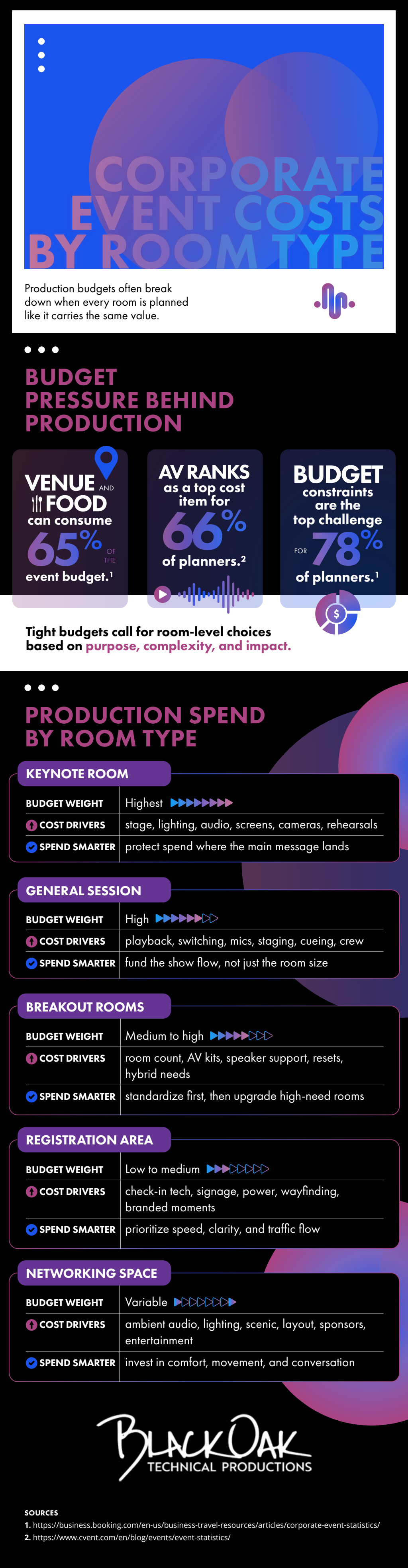
Room selection should ultimately be evaluated against the event format rather than rental price alone. A ballroom offers flexibility but may require substantial production. An auditorium can simplify presentations while creating separate reception costs.
Conference and breakout rooms solve different needs but bring their own capacity and technology considerations. Look over the infographic below for more information.