Guest post by Mikhail Slivinskiy.
Most search engines have now incorporated AI models into their systems, and this shift has changed what content is most likely to appear in search results. To be ranked, mentioned, and cited by major names like Google, Yandex, and Bing, brand marketers need to optimize their content for AI search.
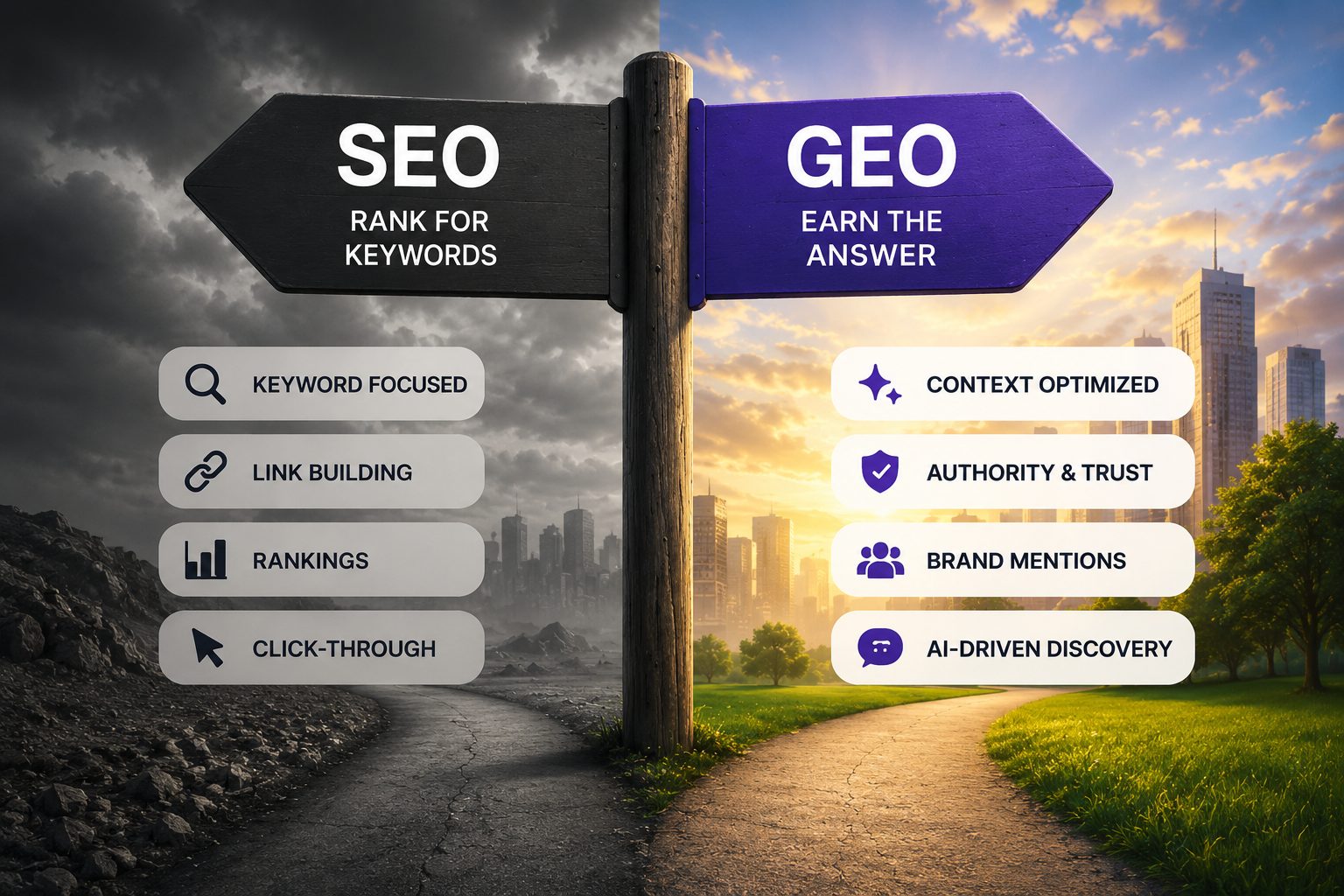
Defining GEO
GEO is the practice of optimizing content so that AI overviews in search engines and AI models are more likely to mention, cite, or synthesize it in their answers. Although many SEO concepts remain helpful for ranking and indexing content, GEO tactics help ensure AI visibility.
User Queries
The use of AI models has shifted how search engines interact with user queries. The objective of traditional search engines was to retrieve information by matching keywords to indexed online content and ranking those web pages on search engine results pages (SERPs). AI-powered searches, in contrast, are designed to understand user intent and provide comprehensive answers.
Keyword Placement
Keyword placement was pivotal to traditional search engines, but now functions differently in the era of AI search. Today, queries are often much longer and more conversational, incorporating full questions and natural-language phrases rather than just key terms. Search engines also no longer focus as much on keyword density and prefer authoritative content that organically includes similar phrases and synonyms.
User Intent
Modern search engine algorithms and AI platforms are trained to understand the intent behind each user query. Large language models (LLMs) interpret the query context and identify various related topics to generate the most comprehensive answer. Many AI-powered models use a query fan-out method in which LLMs simultaneously search for multiple queries related to the user query and generate a summarizing overview.


Sign up with code “TOM10” at checkout to get a 10% discount.
Site Infrastructure
AI-powered search engines and AI platforms also evaluate a website’s technical infrastructure when generating their answers. Every web page surfaced, cited, or synthesized must be easy to crawl, render, and summarize.
Indexability
Indexability should be the foundation of any site’s infrastructure, because content cannot appear in AI search if crawlers cannot reach and read the web pages. Robots.txt and llms.txt files must be configured to allow AI crawlers, and content will be skipped if bots encounter broken code, blocked paths, duplicate URLs, or other technical issues. The inclusion of title tags, meta descriptions, and headers also helps web pages be more indexable by AI systems.
Schema Markup
Schema markup is code that labels online content with machine-readable metadata. It essentially tells AI-powered systems how to parse the content and context of each web page. Common examples include Article, Product, Review, HowTo, FAQPage, and QAPage. Content with proper schema markup is more likely to appear in AI-generated answers because it is more legible to the AI systems that power modern search engines.
Internal Linking
AI-based crawlers and generative algorithms prioritize context and user intent, so a site’s internal linking functions as a signal for how web pages relate to each other. Content clusters with clear main topics that link to related subtopics suggest that the website is thoroughly covering the user query. Well-structured sites are more likely to be used and cited by AI when producing in-depth, contextual answers.
Technical SEO
Technical SEO is the practice of optimizing a site’s infrastructure to meet the accessibility, readability, and performance requirements of AI crawlers. The AI systems that now power most modern search engines need the right conditions to retrieve and cite a web page’s content. Sites with great technical SEO should have fast loading speeds, a clean URL structure, XML sitemaps, canonical tags, and HTTPS security. Schema markup, content freshness, and AI bot permissions are also core aspects of technical SEO.
Mobile Optimization
AI-powered searches prioritize content from mobile-optimized web pages. Google, Yandex, and other major search engines crawl and index the mobile versions of websites before their desktop counterparts. In addition to reducing technical friction for AI crawlers, mobile optimization should focus on content layouts that are clean and readable for humans and machines alike.
Brand Authority
AI overviews and generative AI platforms are more likely to cite authoritative, trustworthy sources. Building brand authority means building credibility signals across the web (in other words, focusing on web presence optimization) so that AI systems recognize a site as the most credible option when generating answers to user queries.
Backlinking
Having quality backlinks is the best way to signal brand authority to modern search engines. Traditional SEO focused on accumulating links that pass ranking signals, but GEO requires earning linked mentions from authoritative sources. AI systems are more likely to draw on content from reputable publications and industry-specific trade publications, so earning backlinks from such sources signals the quality and credibility needed for inclusion in generated answers. Unlinked brand citations also help build brand authority.
Topical Authority
AI systems are more likely to trust sites that comprehensively cover a specific subject area. Strong topical authority involves having hub pages that fully cover main topics before linking to comprehensive subtopic pages. The content across a site should address every intent type that a user may bring to a subject during their queries. Topic-specific terminology demonstrates expertise, as does original research and data that other authoritative sources reference and cite.
Content Freshness
Modern search engines prioritize content that has been recently published or updated. AI models prefer to extract accurate, comprehensive information from current sources. Each web page should include a visible timestamp showing the most recent date the content was updated. Content should be regularly updated with new data and new insights to remain relevant to AI systems. Older and infrequently updated content risks losing its citation status.
Key Takeaways
The implementation of AI has significantly changed how modern search engines function. These new systems are designed to interpret the intent behind complex user queries and tend to draw on authoritative sources. Sites also need basic infrastructure that supports AI crawling and summarization. To stay relevant in search, businesses must adapt their SEO strategies to meet the demands of these emerging technologies.