Guest post by Denise Denton.
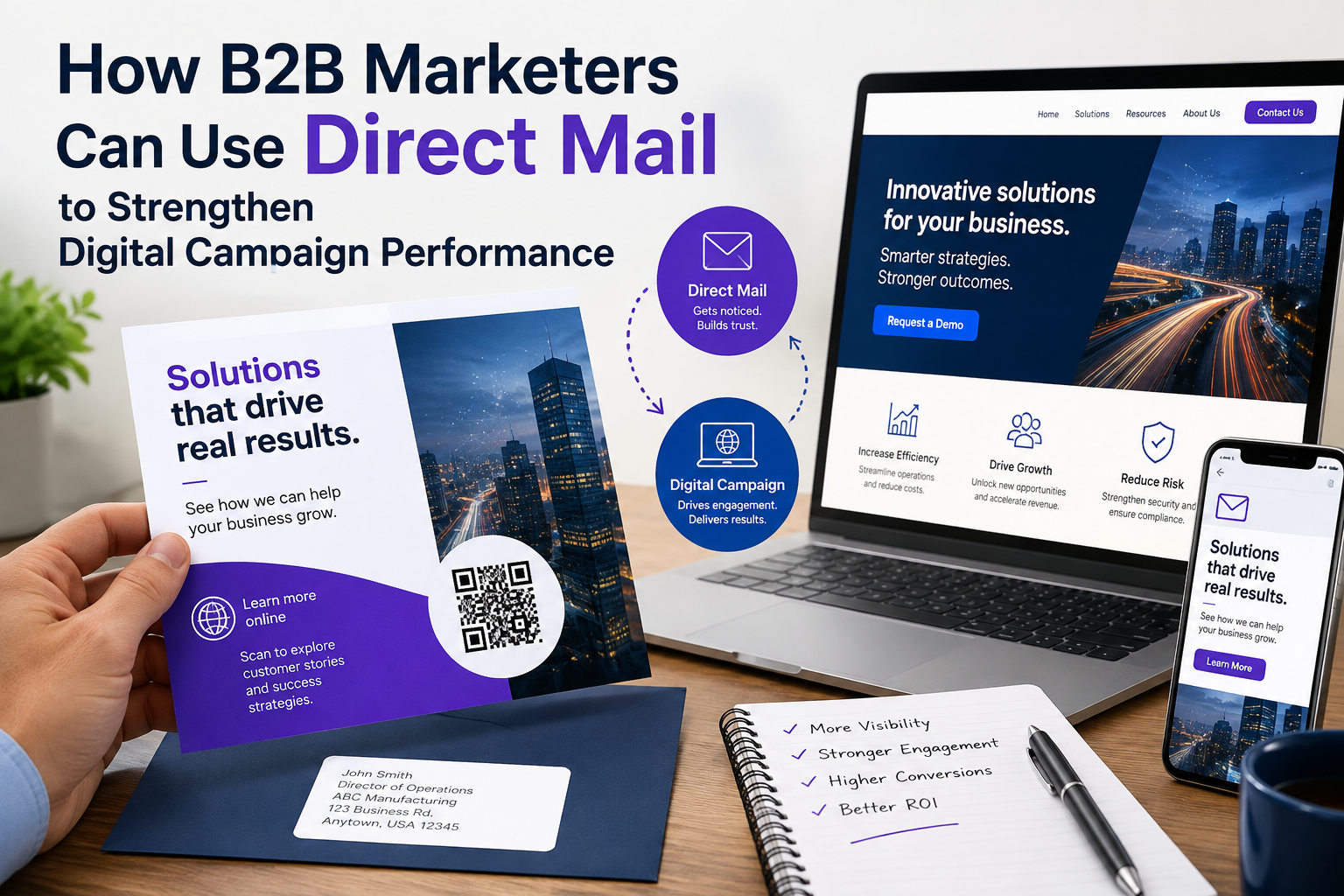
B2B marketing efforts can often take weeks or months and require marketers to connect with multiple stakeholders. While a digital campaign can effectively target multiple businesses in a short amount of time, marketers can incorporate direct mail to amplify their efforts. Direct mail can continue the conversation and further build brand awareness.
A U.S. Postal Service (USPS) white paper evaluating the impact of direct mail in marketing reported the following statistics:
- 40% conversion rates when digital and direct mail are combined
- 68% of marketing respondents said combining digital and direct mail increased website visits
- 60% of marketing respondents said combining digital and direct mail increased ROI
Some companies even experienced an average 15% increase in sales when they incorporated direct mail with digital marketing strategies.
Together, these statistics show that direct mail can strengthen digital campaigns by generating more traffic, conversions, and sales.
Why is Direct Mail Different from Digital Marketing Channels?
Direct mail stands out from most (digital) marketing channels because its real, tangible nature makes it harder to ignore. It also delivers these four benefits.
Physical Interaction
Unlike digital marketing channels, direct mail requires the target audience to engage physically by opening it up and reading its content. Just the act of touching an object, such as a piece of mail, activates parts of the brain that digital media cannot, making direct mail an effective way to cut through the noise and connect with an individual.
Unique Experience
Direct mail also provides the opportunity to appeal to the recipients’ senses. Examples include using specialty paper, scented materials, and interactive designs. To take it one step further, B2B marketers can also direct their audience to advanced technology, such as augmented reality and near field communications, via a QR code or link in a mail piece.
A fun, unique experience will likely create a lasting impression and stand out from competitors.
Greater Visibility
Even if the target audience doesn’t open the mail immediately, the mail will likely be on their desk for a few days. This allows for more visibility and awareness of a brand since a piece of mail can’t be easily dismissed like an email with a single swipe.
A piece of mail doesn’t have to compete in a crowded email box, making it more likely that the recipient will notice it. Combined with personalization, mail can speak directly to an individual and show how their organization will benefit from working with a particular business.
Personalization
Direct mail provides marketers the opportunity to send a personalized message. For example, if they’re targeting a particular stakeholder, they can create a message that will get the stakeholder to take action. Custom postcard printing services make it easy to produce personalized postcards with tailored messaging, branded graphics, and unique calls to action for different audience segments.
How Can Direct Mail Amplify the Efforts of a Digital Campaign?
When building a digital campaign, marketers should brainstorm ways they can amplify their efforts. While using a combination of online channels will build awareness and reach more audience, direct mail can serve as a personalized follow up to businesses who have engaged with the campaign online. It can also redirect prospects back to the digital campaign, driving additional online engagement.
As with any marketing strategy personalization is key to achieving higher response rates. B2B marketing teams can segment their direct mail list using the data from the prospect’s initial interaction with the digital campaign. Here are 4 B2B segmentation methods (dimensions of a B2B buyer persona) to try:
- Firmographic: Group prospective organizations by broad business characteristics, such as industry, company size, location, and revenue. These characteristics will help produce messaging that speaks to a group’s priorities.
- Needs-based: Different companies have different needs. Think about the problems they are trying to solve and generate direct mail content that focuses on solving those issues.
- Account-based: Marketers targeting high-profile prospects should create custom outreach for individual organizations rather than grouping companies broadly.
- Technographic: Technographic segmentation evaluates the systems and tools a business already uses and focuses on how a new product can improve that business’s efficiency and return on investment (ROI). It can also highlight how a product reduces risk.
Strengthen Digital Campaign Performance with Direct Mail
Continue the momentum of a digital campaign by following up with prospective businesses via direct mail. Direct mail offers unique experiences and lasting impressions that online mediums can’t provide, making it a valuable tool for B2B marketers.
Denise Denton is Vice President of Marketing, Franchise Services, LLC. Franchise Services is a franchisor that owns the printing, signs and marketing services brands Sir Speedy, PIP and Signal Graphics.