Contributed post.
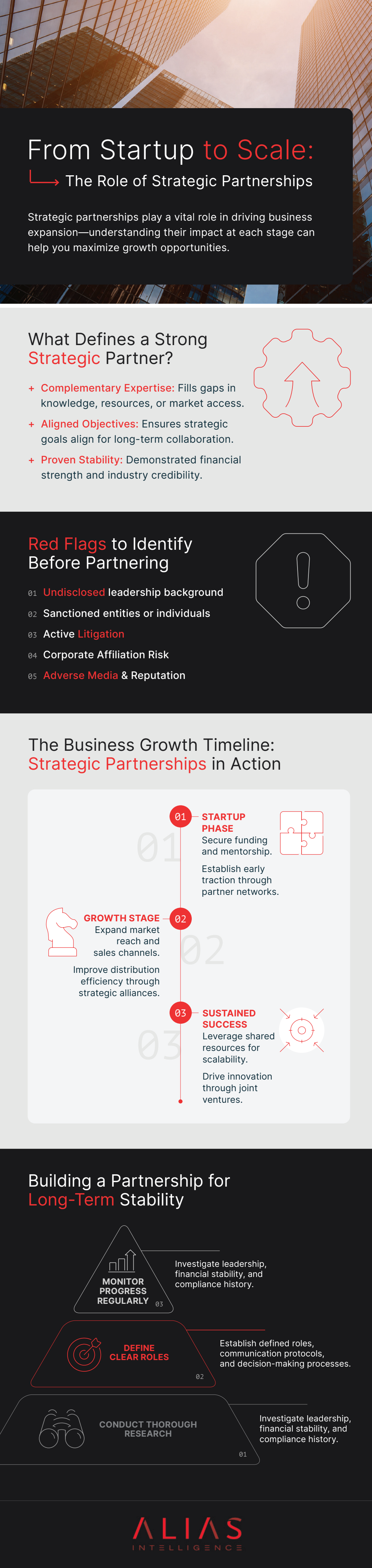
Strategic partnerships can give a young company access to customers, expertise, technology, or distribution channels that would take years to build independently. Yet the type of partnership that helps a startup gain traction may become less useful as the business grows.
 Treating partnerships as something that should change with the company can keep them connected to actual growth priorities.
Early Partnerships Can Provide Market Proof
Startups usually enter partnership discussions with limited leverage. They may have an interesting product but little brand recognition, a small customer base, and few documented results. At this stage, the right partner can help establish credibility.
These relationships can also generate useful marketing material. Customer results, implementation lessons, and credible case studies often carry more weight in B2B markets than broad promotional claims. The goal should still be specific. A recognizable partner is valuable only if the relationship helps solve a real business problem.
Growth Changes What a Good Partner Looks Like
Once a company has established demand, partnership decisions need to become more systematic. The question shifts from whether a relationship can create an opportunity to whether that opportunity can be repeated.
Consider a referral partnership that produces a handful of valuable customers but requires substantial attention from senior leadership. That arrangement may work during the startup phase. At a larger scale, however, the company may need a formal channel program with defined incentives, training, lead-sharing procedures, and performance expectations.
Marketing teams also need clearer attribution. Leads generated through webinars, partner referrals, integrations, or co-branded campaigns should be tracked through the sales process. Otherwise, companies can continue investing in relationships that appear active without knowing whether they contribute meaningful pipeline or revenue.
Larger Partnerships Require More Scrutiny
As the financial and operational stakes increase, partner evaluation becomes more important. A relationship involving customer data, shared technology, international expansion, or a major distribution agreement can create risks that a simple referral arrangement does not.
Companies should examine a potential partner’s financial position, leadership, reputation, legal history, security practices, and ability to fulfill its commitments. For higher-stakes relationships, a due diligence firm may be brought in to investigate areas that require deeper verification.
This work matters because partnership problems can affect customers directly. If a critical technology provider experiences repeated outages or a distribution partner fails to meet service expectations, customers may associate the resulting problems with both companies.
Partnerships Need an Exit Point
Business relationships can outlive their usefulness. A partnership created to enter one market may matter less once the company builds its own sales presence there. Another partner may gradually stop producing referrals even though both companies continue promoting the relationship.
Periodic reviews should compare the original purpose of the partnership with current results. Revenue is one measure, but companies can also examine qualified leads, customer retention, product adoption, market access, and the resources required to maintain the relationship. Ending or restructuring an underperforming partnership can free employees to concentrate on relationships with greater potential.
Strategic partnerships can support growth at every stage, but their purpose should evolve with the company. Startups may use them to build credibility and prove market demand. Growing businesses need relationships that can produce repeatable results, while larger organizations require stronger governance and performance measurement.
This is an insightful article on how strategic partnerships can evolve as a company grows. I liked the point that partnerships should adapt to changing business goals, customer needs, and new market opportunities. The examples make it easier to understand how the right partnerships can support sustainable business growth.
Thanks Nidm, glad you found the post helpful!